Pages

Showing posts with label Nick Quantrill. Show all posts

BritCrime's Best Books of 2016: Author @NickQuantrill recommends...

Nick Quantrill's book of the year is Fever City by Tim Baker.

Fever City by Tim Baker

Nick Alston, a Los Angeles private investigator, is hired to find the kidnapped son of America's richest and most hated man.

Hastings, a mob hitman in search of redemption, is also on the trail. But both men soon become ensnared by a sinister cabal that spreads from the White House all the way to Dealey Plaza.

Decades later in Dallas, Alston's son stumbles across evidence from JFK conspiracy buffs that just might link his father to the shot heard round the world.

Violent, vivid, visceral: FEVER CITY is a high-octane, nightmare journey through a Mad Men-era America of dark powers, corruption and conspiracy.

Shortlisted for the John Creasey New Blood Dagger.

♠ Recommended by Nick Quantrill, author of The Dead Can't Talk.
Nick Quantrill's books on Amazon
twitter.com/nickquantrill
www.nickquantrill.co.uk

#BritCrime Festival: Saturday evening panel: The Replay

Quentin Bates, Nick Quantrill​, Alex Shaw​ and Simon Toyne​ talking about plotting, playlists, settings, the skills required to be a modern writer and more...

We had a great introduction from Helen Cadbury and then suffered technical difficulties, so we've started the replay from where we got back on track again. Apologies to Helen as this means you can't see her in this video.

You can watch the replay here:


#BritCrime Festival: Nick Quantrill talks to Barry Forshaw about Brit Noir

Brit Noir by Barry Forshaw
by Nick Quantrill

So, Barry, piecing together “Brit Noir” must have been something of a thankless task? Allowing for the fact we all have our personal favourites, did you have a set of self-imposed rules to make sense of the contemporary crime writing scene?

I had a few rules. Firstly that Brit Noir was to cover only the contemporary scene – and as it was a relatively compact guide, I’d agreed with my publisher that it should be living writers. Of course, that made the book a hostage to fortune – just before it was published, the great Willie McIllvanney died, and I reluctantly had to remove his entry. I made a point, however, of saying elsewhere in the book that he was the godfather of Scottish crime fiction, influencing Ian Rankin et al.

I had not set out to write a social history of the British crime novel, though I tried to touch on the more radical notions of the genre; however, the ‘reader’s guide’ format I used (with entries ranging from expansive to capsule form to single-line entries) hopefully allowed for a comprehensive celebration of a lively genre, a genre, in fact, which continues to produce highly accomplished, powerfully written novels on an almost daily basis.

You state in the book’s introduction that crime writing is in rude health. What do you attribute that to?

Crime fiction has always been a much-loved genre, but some years ago, it comfortably became (in terms of sales and library lendings) the most popular of popular genres, outpacing romantic fiction. I suppose one might argue that in turbulent times, crime fiction presents solutions to what might once have seemed insoluble problems – giving the reader the kind of closure that one doesn’t really find in real life. Of course, that's pretty well always been case since the time of Dickens, so it's not a new phenomenon. Rude health? Yes – there are a lot of bloody good writers around at present!

I found the geographical split in the book to be fascinating – location is such an important facet of crime writing – did you detect any patterns emerging in terms of regional output? Did you surprise yourself?

Actually, Nick, you touch on one of the nightmares of writing the book -- so many writers (Ann Cleeves, for instance) set their books in a variety of locations. This made it difficult not just to locate writers, but to identify specific geographical trends – and regarding the latter, I’d say that most patterns and trends might be seen to be spread throughout the country; in other words, people are writing domestic noir (for instance) all over the UK. inevitably, though, the genre itself largely remains London-centric.

The second half of the book centres on film and television. Are we still trying to catch up the Americans and Scandinavians when it comes to onscreen crime?

The Scandinavian influence has been largely beneficial, forcing British filmmakers and writers to up the ante in terms of social commitment and sense of place. It's one of the reasons we now have shows such as Broadchurch.

We’re clearly living in increasingly uncertain and unstable times (it’s probably all changed again since I typed this…). Do you expect to see that reflected in the crime fiction we’ll see published in the near(ish) future, or do you think as readers, escapism will be the order of the day?

Escapism will always have a place – and why not? -- but publishers are now cannily aware that an element of societal critique in a crime novel will furnish some added value. Which means we’ll continues to see both.

Indulge me a personal question on the roots of the Brit Noir…I’m a crime writer from the Humber region, the stomping ground for Ted Lewis. Where do you see writers like Lewis and Derek Raymond fitting in? Do you see their fingerprints on present day crime writing?

Derek Raymond
You know, it’s ironic. the influence of Ted Lewis may be seen not so much in his books, but refracted through the use of Newcastle in Mike Hodges’ film of Jack's Return Home, retitled (of course) Get Carter. That film was almost single-handedly the reason why the English provinces are now treated in crime fiction with the kind of richness and thoroughness that was previously seen in books set in the capital. As for the unique (and louche) Derek Raymond, he remains a kind of ‘evolutionary sport’ – his deeply personal books can hardly be said to have created a school, could they? His writing was so individual that no one else could really manage the same idiom.

And lastly, you rightly say you cast the net as wide as possible to include as many writers and locations within the book’s pages. Fancy updating it in the future?

I'd love to update it -- excellent new writers are appearing all the time. And (to my cost) quite a few of them have already ruefully remarked to me that they didn't make the final cut – though you’re in it,Nick! Right now I'm tackling American Noir for the next book, so I have my hands full all over again.

Barry Forshaw’s Brit Noir is published by No Exit Press

Nick Quantrill is the author of  The Dead Can't Talk and other books.

♠ More BritCrime Festival author interviews

BritCrime Authors Best Books of 2015 - Part 1

By SJI Holliday

After reading various 'book of the year' articles, we thought it made sense for us to share our BritCrime authors' favourites with you. What have crime writers been reading this year? You might be surprised! To shake things up a bit, these are not all books published this year, they're just books we've read this year... and they're not all crime - fancy that.


Nick Quantrill


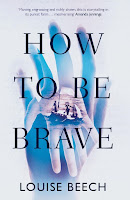
♠ How to be Brave by Louise Beech
♠ Gun Street Girl by Adrian McKinty
♠ Living on the Volcano by Michael Calvin.

 How to be braveHow to be Brave is a love letter to the power of stories. It’s about a mother whose teenage daughter is struggling to come to terms with being diagnosed with diabetes. The deal is that if she accepts her injections, they’ll share the diary of her great-grandfather’s incredible survival tale on a drifting raft in World War Two. I really didn’t expect it to be to my taste, but it blew me away.

♠♠♠ 


S.J.I. Holliday


♠ Untouchable by Ava Marsh
♠ Into The Darkest Corner by Elizabeth Haynes
♠ A Kind Worth Killing by Peter Swanson

 Untouchable
Untouchable is a sexy, pacy thriller with an incredibly compelling protagonist - Stella/Grace, a helpline worker by day, a high-class escort by night. Why has has she chosen this path in life, when she clearly has friends and family who wish that she hadn't? She gets embroiled in the worst kind of hedonism with the worst kind of people, but there is a vulnerability there too - coming both from her, and from many of the lonely types she meets. This novel is beautifully written - it is captivating, gritty and intelligent. I couldn't get it out of my head.


♠♠♠ 


Helen Smith


♠ The Book of Strange New Things by Michel Faber
♠ The Secret Life of Bees by Sue Monk Kidd
♠ Last Night at the Lobster by Stewart O’Nan

 The Book of Strange New ThingsThe Book of Strange New Things is a moving book about loss. An English missionary travels to a faraway planet that has been settled by people from earth. His job is to keep the indigenous population happy by talking to them about the Bible. His separation from his wife, who is still on earth, leads to a gradual estrangement. It’s an extraordinary book - one of the best I’ve read in a long time. Partway through reading it, I realised the author’s wife was dying as he wrote it, which gave it an added, almost unbearable poignancy.


♠♠♠ 


Marnie Riches


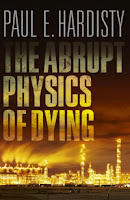
♠ The Abrupt Physics of Dying by Paul Hardisty
♠ To Rise at a Decent Hour by Joshua Ferris
♠ The Farm by Tom Rob Smith


 The Abrupt Physics of DyingThe Abrupt Physics of Dying has all the things I might look for in a thriller - a truly international plot set in Yemen about an environmental disaster; a conspiracy within heavy industry; political turmoil and corruption. Hardisty’s prose has a lyrical quality to it. His descriptions of the harsh Yemen landscape are vivid. His main character, Claymore Straker is a godless, fallible South African ex-soldier. Clay’s reflections on the devout Muslim beliefs of the Yemeni characters constitute intelligent soul-searching. There is even a love story at the book’s heart. But The Abrupt Physics of Dying, for all its literary finesse and environmentally aware politics, never loses pace. It’s gripping. It’s violent. It’s a bloody exciting read.

♠♠♠ 


Michael J. Malone


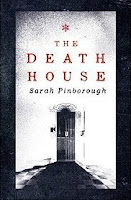
♠ The Death House by Sarah Pinborough
♠ The Cartel by Don Winslow
 The Death House♠ Canary by Duane Swierczynski


The Death House is an exercise in how less can be so much more. Children are taken from their parents in this strange world and left in a sanatorium till the strange sickness they carry kills them. Yet even in this most bleak of places, love can flourish. Made me cry. Need I say more?


♠♠♠

C.L. Taylor


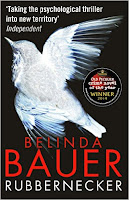
♠ Rubbernecker by Belinda Bauer
♠ A Man Called Ove by Frederik Backman
♠ First One Missing by Tammy Cohen

Rubbernecker
Rubbernecker won the Gold Dagger for best crime novel of the year at the Harrogate Crime Festival in 2014. I can't remember the last time I liked a character as much as I liked Patrick, or found a character so fascinating. I loved the setting - a dissection class and a neurological ward - and I was desperate for Patrick to solve the mystery of number 19's death. It was a gripping, darkly humorous and fascinating book that gave me serious writer envy.

♠♠♠ 


What were your favourite books this year? Tell us in the comments!


Come back tomorrow for Part 2.


Panel 7: Crime in the City: 2pm–4pm, Sunday 12 July #BritCrime

2pm–4pm UK Time | 9am–11am EST
Sunday 12 July
Live Q&A with the authors hosted on our Facebook page
♠♠♠
http://smarturl.it/h9mzv9
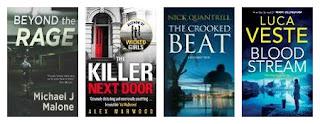
Michael J Malone: Beyond the Rage

Meet Glasgow's answer to Tony Soprano in this intelligent, violent thriller...

Even though he’s a successful criminal, Kenny O’Neill – Glasgow's answer to Tony Soprano – is angry.

 Not only has his high-class escort girlfriend just been attacked, but his father is reaching out to him from the past – despite abandoning Kenny as a child after his mother’s suicide. Kenny is now on a dual mission to hunt down his girl’s attacker and find out the truth about his father... but instead he unravels disturbing family secrets and finds that revenge is not always sweet.

An intelligent, violent thriller shot through with dark humour, Beyond the Rage enthralls and disturbs in equal measure. With an intricate plot, all-too-believable characters and perfectly pitched dialogue, this is a masterclass in psychological crime fiction writing.  

Michael J Malone is the author of two crime novels: Blood Tears, which won the Pitlochry Prize from the Scottish Association of Writers; and A Taste for Malice. Both were hits with crime critics and fans alike. His thriller The Guillotine Choice is the amazing true story of an innocent man's time in the notorious Devil's Island penal colony.
♠♠♠

http://smarturl.it/82q77c
Alex Marwood: The Killer Next Door

A dark, original and irresistibly compelling thriller...

No. 23 has a secret. In this bedsit-riddled south London wreck, lorded over by a lecherous landlord, something waits to be discovered. Yet all six residents have something to hide.

Collette and Cher are on the run; Thomas is a reluctant loner; while a gorgeous Iranian asylum seeker and a 'quiet man' nobody sees try to stay hidden. And watching over them all is Vesta - or so she thinks.

 In the dead of night, a terrible accident pushes the neighbours into an uneasy alliance. But one of them is a killer, expertly hiding their pastime, all the while closing in on their next victim... As a cloying heatwave suffocates the city, events build to an electrifying climax in this dark, original and irresistibly compelling thriller.  

Alex Marwood is the pseudonym of a journalist who has worked extensively across the British press. Her first book, The Wicked Girls, was a word-of-mouth sensation, won the prestigious Edgar Award for Best Paperback Original in 2014, and was nominated for an International Thriller Writers Award in 2013. Alex lives in south London.
♠♠♠

http://smarturl.it/tjqxla
Nick Quantrill: The Crooked Beat

 Private Investigator Joe Geraghty is drawn by his brother into a murky criminal world around the busy port of Hull...

When Joe Geraghty's brother finds himself in financial trouble, it's only natural that he turns to the Private Investigator for help. But when it relates to a missing consignment of smuggled cigarettes, it's not so easily sorted. Drawn into the murky world of local and international criminals around the busy port of Hull, Geraghty knows the only way to save his brother is to take on the debt himself. As he attempts to find a way out of the situation, the secrets and conspiracies he uncovers are so deeply buried in the past, he knows he's facing people willing to do whatever it takes to keep them that way.

Nick Quantrill was born and raised in Hull, an isolated industrial city in East Yorkshire. His Joe Geraghty crime novels, "Broken Dreams" and "The Late Greats" and "The Crooked Beat" are published by Caffeine Nights. A prolific short story writer, Nick's work has appeared in Volumes Eight, Nine and Ten of "The Mammoth Book of Best British Crime" alongside the genre's most respected names. In 2011, Nick became the first person to hold the role of 'Writer in Residence' at Hull Kingston Rovers, contributing exclusive fiction to the match day programme and assisting with the club's literacy programme. Nick's stories are both entertaining and thought provoking, and although the settings may be local to him, the ideas and issues resonate on a much wider basis. When not writing fiction, Nick contributes reviews and essays to a variety of football and music websites. He lives in Hull with his wife, daughter, cat and the constant fear Hull City will let him down.
♠♠♠

http://amzn.to/1RsDzgH
Luca Veste: Blood Stream

Nothing stays secret...

Social media stars Chloe Morrison and Joe Hooper seem to have it all - until their bodies are found following an anonymous phone call to their high-profile agent. Tied and bound to chairs facing each other, their violent deaths cause a media scrum to descend on Liverpool, with DI David Murphy and DS Laura Rossi assigned to the case.

Murphy is dismissive, but the media pressure intensifies when another couple is found in the same manner as the first. Only this time the killer has left a message. A link to a private video on the internet, and the words 'Nothing stays secret'. It quickly becomes clear that more people will die; that the killer believes secrets and lies within relationships should have deadly consequences...

Luca Veste is a writer of Italian and Scouse heritage, married with two young daughters. He studied psychology and criminology at University in Liverpool.
♠♠♠ 

Full programme here: http://britcrime.com/programme 
Facebook page: http://facebook.com/britcrime
Twitter: @britcrime
Keep up to date with Festival news: http://britcrime.com/newsletter